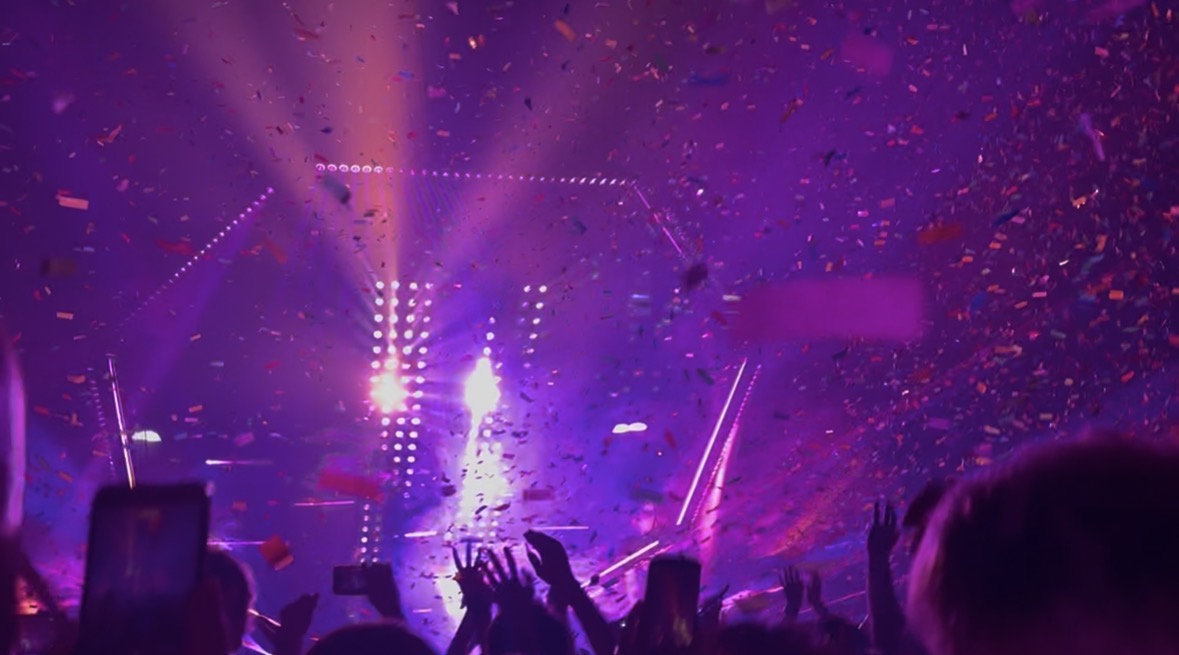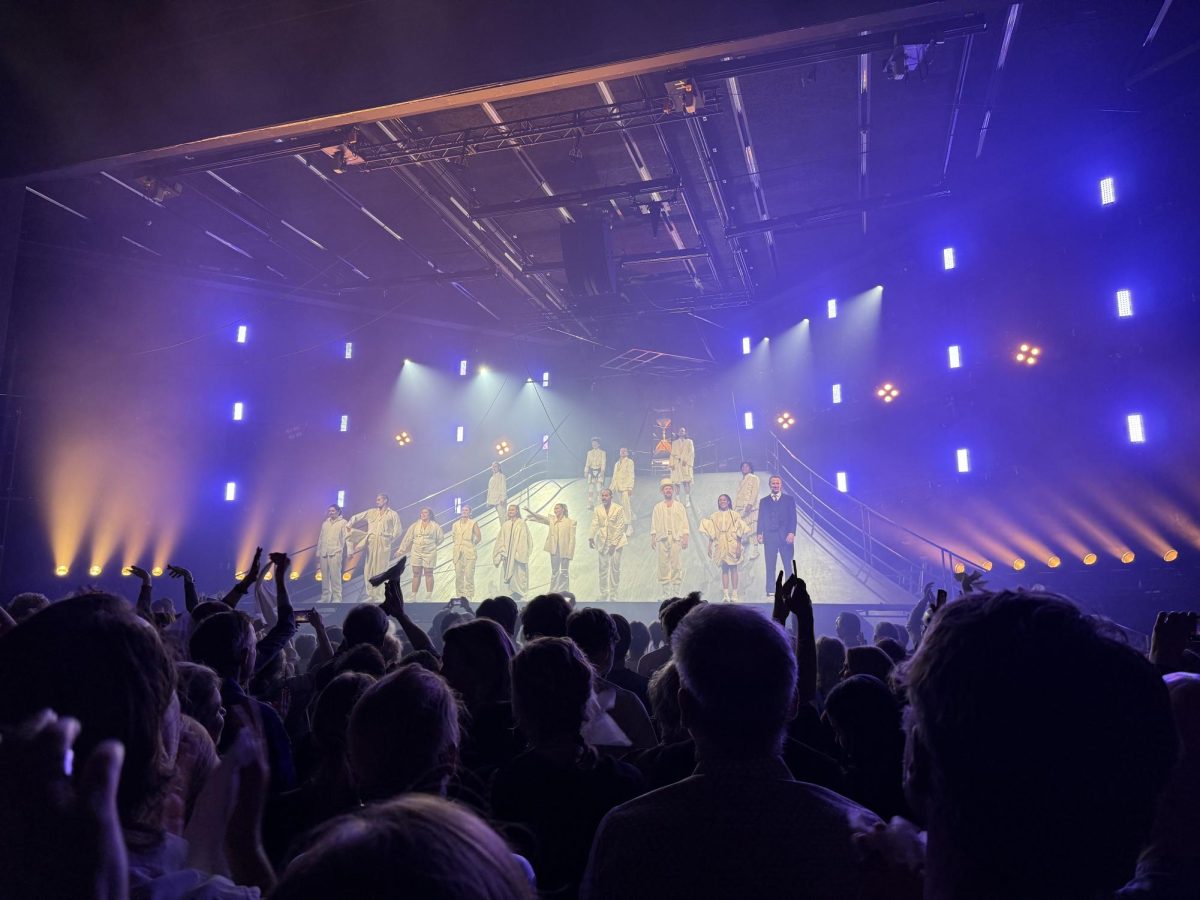
While there is no way to perfectly define the category of performance, the choreographer and director Benke Rydman categorises it as “something on the borderline between a live concert, theatre and dance show.” Before the music and dancing began, everyone had the opportunity to write a secret on a piece of paper and place it in a box. Some were read out loud during the performance, while the remaining were hung up on long lines of string when the audience walked out. DJ icon Avicii’s music guides the show as the deepest of our secrets were exposed.
Together – the keyword demonstrated throughout the entirety of this performance. Over half the audience stood on the stage, with the dancers and musicians surrounding them on the peripheral stage, on heightened stages in the middle, or at times, even amongst the crowd. Interactions with the audience took place; on stage, crowd members dancing or conversing with the performers. Some audience members were given the task of shoving shaving cream in the faces of the actors. This allowed the performers to place themselves at the same level as the audience; as normal people. There was a shared trust within the crowd. No one disrespected the performers or each other. A connection tied everyone together. The show emphasises the need for kindness, understanding and consciousness of everyone around us, the things making the setup possible.
This performance highlighted aspects of contemporary society that are often overlooked or deemed insignificant, rather than simplifying it to topics such as screens or media. The audience followed five main characters and their personal stories, actions and emotions – the things they in secret carry and keep locked inside them.
Friendship pressures and eating disorders. The fear of saying goodbye to your parents once their death approaches. The sadness and mental stress that comes with being the highest ranked. The two sides of a “Gen Z” relationship, where miscommunication and differences in approach get in the way. These were the storylines told. While specific to parts of the audience, references such as Swedish falukorv, modern “slang” and behavioural trends were visibly relatable to several people in the audience. The emotion and understanding it brought out was radiating from person to person.
There was an immense duality to the show. At moments, it had the sensation of being at a nightclub, when Avicii’s songs like “Levels”, with its sharp chords, washed through everybody. The room was instantly filled with an electric shock of joy. What the performers did so well was bring up the mood through non-stop dancing, jumping, and singing, inspiring and encouraging the crowd to do the same. These sections highlighted the bright moments, when light and love seem to paint every corner of life. Whether or not it was the director’s intention, they took the effect of a metaphor of human pain. The performance set the audience free of their emotional burdens. Or it created a space where they could hide behind a facade, disguising their feelings for a brief moment. Every person in that space carried something heavy, and for a moment they could let go of the darkness inside them, and be free in the space, or just pretend to feel a different emotion. Art brings people together, releasing worries from those who hold them.
At any moment, the show could have taken a turn into the fear and hurt that social gatherings can mask. In scenes like this, ballad versions of some of Avicii’s most famous songs, like “Wake Me Up” and “For A Better Day” seeped from the speakers. Here, the white napkins, that had been handed out in the beginning, were used in another way than as objects for heightened spirits through waving and dancing – wiping tears of nostalgia and heartbreak.
In many ways, the entire performance was a reflection of what human life is. There are moments of euphoric joy, others of anguish and melancholy. What the show so beautifully unveiled, was that these two states of being coexist in everyone’s lives, even with their stark contrast. The good cannot exist without the bad, and even though our feelings so often punch us in the face, and make us feel so lonesome and insignificant, there is always another person who has felt, or currently relates to your situation. The issue seems to be that we are afraid to let people notice our feelings, out of fear that they wouldn’t understand, or that we would place a burden on another person by letting our walls down. We isolate ourselves, and that only accentuates our loneliness. Yet at the end of the day, we all struggle and know that other people do as well; we are lonely, together. Together in loneliness, in heartbreak, in fear.
The question lingers; why do we not connect and heal, together? Rydman wonderfully demonstrates the need, and possibility of doing just that through Lonely Together. Closing the 90-minute show was an intensified “Wake Me Up”, juxtaposing the earlier, melancholy version. Except for one which I won’t tell, all characters came to terms with themselves, and their circumstances. By ending toxic relationships, recognising their own flaws, and taking the brave steps needed to alter the course of their life, they were able to embrace their fullest selves, feel utmost joy and connect through it. Costumes transitioned from black to white, the dancers’ movements became increasingly energetic, and suddenly some were swinging from wires above.
While the performance considers heavy subject matters, it is completely appropriate viewing for anyone from 10. When viewing and really taking the performance in at a deeper level, and carefully paying attention to every artistic choice, the show becomes something more, so I urge you to try. However even if your goal is just to experience a spectacular show, this is really a fantastic opportunity for everyone. As memorable as it is, it will stay with you for the long haul. You have time – Lonely Together is on until May!
Personally – and I would like to believe the majority shared this sentiment – I walked out with a sense of belonging. A belonging to the community that is everyone. The director’s ambition was “that everyone leaves with a feeling of togetherness, happiness and hope of a brighter future.” And that was exactly what was achieved.