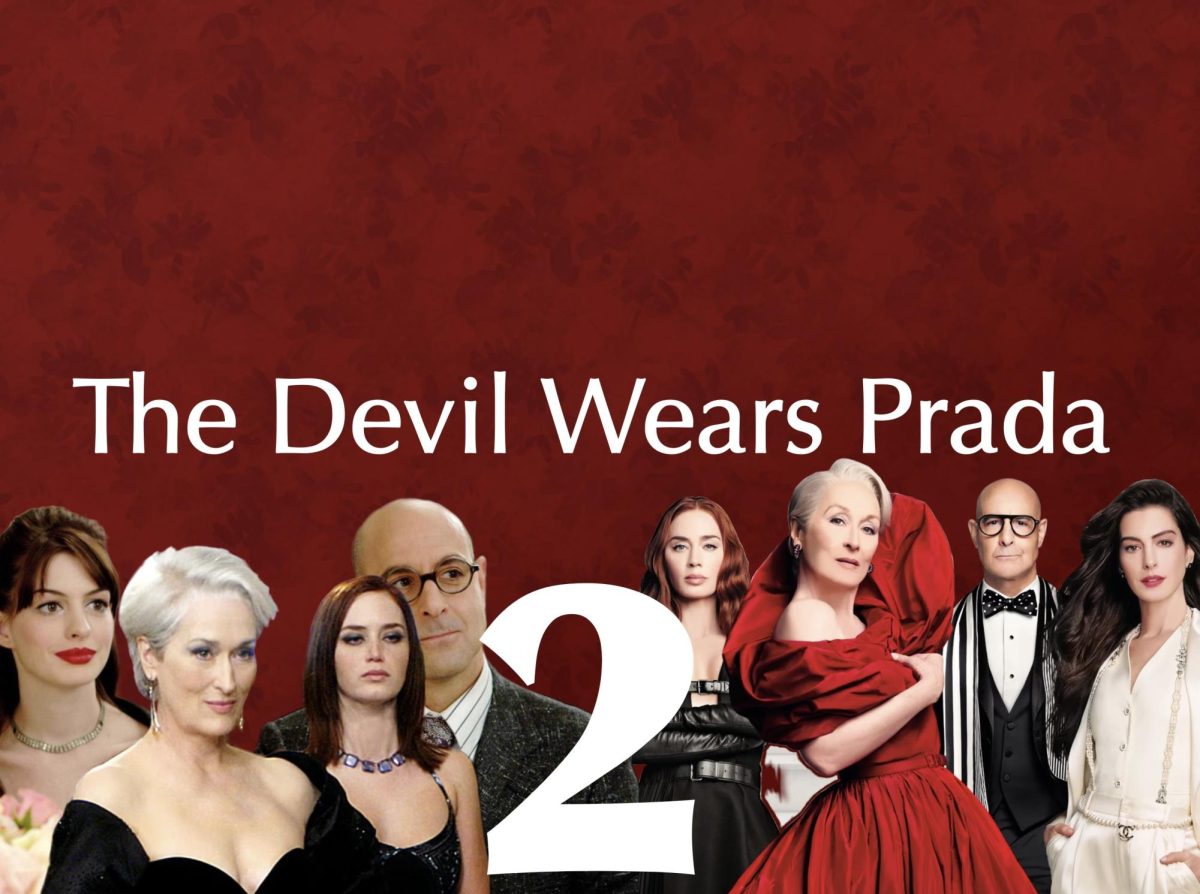
When I heard The Devil Wears Prada was getting a sequel, I… wasn’t affected in the slightest. And this was entirely because I didn’t believe the news was real.
Look, I love the original, and I think it’s a great feel-good tale about ambition. Of course, it’s one of those timeless classics everyone knows, and quotes regularly – so why on earth would such a perfectly wrapped up movie need a sequel? Really? How is this the movie that made Meryl Streep break her ‘no sequel’ rule? It clearly didn’t need one. And if such a sequel were to exist, it would naturally just be an obscenely transparent money-grab made to capitalise on the nostalgia for far simpler times. Well, the latter may be true; yet, as we know, The Devil Wears Prada 2 came out this May. What’s the verdict? Naturally, there will be some minor spoilers ahead, so if you plan to watch it soon, read with caution.
I’m going to put this ahead first: I liked the movie.
No, it wasn’t show-stopping incredible. Yes, there was a lot more Netflix lighting. Yes, they tried way too hard to make callbacks to the first movie every second to try and ride on the coattails of its legacy. And, no, it did not have the same energy that the original had. But I don’t think we should’ve expected it to – and I’ll elaborate on that further down. So, while a sequel might still be considered unnecessary, my opinion is that what we did get wasn’t bad.
I’ve heard a lot of mixed opinions on this movie. Let me get the negatives that I agree with out of the way. To start off, I hated – and, I mean, hated – the inclusion of Andy Sachs’ new boyfriend. Really, who was that guy? I don’t remember his name, which is a big signal to how insignificant he and his subplot were. I honestly didn’t register that he was supposed to be a love interest until well into the movie; the unbearable lack of chemistry between Anne Hathaway and New Boyfriend’s actor genuinely made me groan whenever he appeared onscreen. Why does he exist, and when is the film industry going to stop pushing this agenda that they have to give leading women love interests, when they add nothing to the plot or the development of the main character? Just get rid of them! Nate, Andy’s original boyfriend, was also unbearable (so maybe the inclusion of the new one was another attempt to stay faithful to the first movie! Go figure). But at least Nate served as a good plot device to show the strain between Andy’s work and personal life, and added to the mirror between Andy and Miranda Priestly. New Boyfriend, however, was unfathomably pointless, utterly disappointing, and wholly unpleasant to watch onscreen.
Personally, I see The Devil Wears Prada as a movie primarily about ambition and power. But it is also undeniably a movie about fashion; and for a movie with Prada in its title, the stylistic choices in the sequel were questionable. Andy’s Hamptons dress was underwhelming, and Miranda Priestly wore coats I would think her original version wouldn’t want to be caught dead in. This, along with other minor flaws – boring lighting, excessive product placement, a rather convoluted plot, and over-pandering to old audiences using quotes from the first movie that feel forced into the dialogue rather than naturally woven in – are why I think a lot of the criticism for the movie was valid. But I did say earlier that I ended up liking the movie. It follows, then, that I think there were things of value to take from the movie.
For starters, the music selection was unbelievable. With Lady Gaga, Madonna, RAYE, Laufey, and others joining the soundtrack for this movie, it’s not hard to see why it cost so much to produce (by most reports, around $100 million).
But here’s what I liked about the sequel: it showed, very well, the shift between the world now and twenty years ago. It isn’t trying to be the same thing it was in 2006. The whole plot is built around how hard it is to keep art and fashion a respectable industry during the rise of AI and projects with absolutely no soul. This is exactly the kind of message that should be propagated throughout popular media in today’s times. The producers went as far as to hire an actual human artist to hand-draw an AI image used as a plot device – that’s a move I can completely get behind. This movie is built around the expectations of today’s time.
Another complaint I saw is that Miranda isn’t the iron lady she was in the first movie; but isn’t that the point? The world is changing, and we no longer want to see plastic figures at the head of magazines. We want humanity, we want emotion, we want a real respect for art. While magazines – Runway in the film, Vogue in the real world – aren’t exactly as popular as they were before, it doesn’t mean we have to strip fashion expression of its identity completely. Adapting, persevering, and preserving the importance of art through the change of the world order is the message the film is trying to give us. I, personally, am in favour of this message. Therefore, while this movie is too obviously a milking of the original, seeing Miranda Priestly recoil at the mention of AI and the ridiculous nature of a lot of current trends was quite cathartic.
Maybe popular media like this is the best place to start discussions about the ethics of AI and the intrinsic value of authentic art; everyone can chip in, and everyone is invited to think about the issue, because everyone is watching. This, above all, is why the sequel has won my favour. And I think it’s safe to say that going by the movie, rather than an AI render of a designer outfit, the devil is still wearing Prada.