With the enrichment class, “The Global Classroom”, we were invited to go on a field trip to KTH, where we learned about how modern age robots are engineered, and their functionality in the real world.
At KTH, we were guided by two alumni with PhDs in engineering. They explained their projects to us, allowing us to interact with various robots and describing how certain categories of robots functioned differently from others. For example, one key example was the functionality of social robots. Social robots are humanoid or physically embodied machines that were designed to interact with humans, mimicking social behaviour and provide assistance in fields such as healthcare, being able to treat patients.
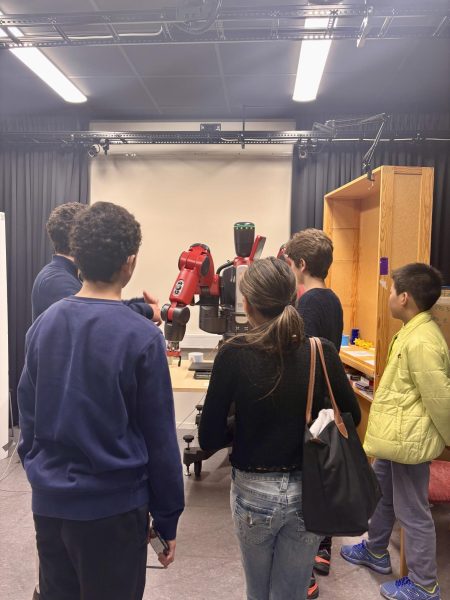
We were later split into 2 groups, each engaged with an activity. Our group in particular, played Taboo with two robots. The aim of the game was to describe a word to one of the robots, Misty, without using it while the other one, Furhat, kept track of our engagement. It would take notes of people who were not talking or making eye contact, suggesting that they need to be more involved.
On the other hand, group 2 got to witness another robot, whose main purpose was to pick up trash or other objects that were left on the ground and follow instructions given to it by its creator.
Overall, this trip was insightful as we learned about how certain robots have functionalities that can be used in the real world. Robots have the capability to interact with humans through eye contact, guidance, and even communication, ensuring that everyone keeps engaged in the conversation.
The reason we took this trip was that it was a way to see how robots, such as social robots, can function in real life and handle concepts such as fairness and inclusivity, which were once limited to the human mind. The experience was helpful as it created inspiration for our project ideas, contributing to making the robot “Haru”, just friendly and social for students. If we had to say what the most interesting part of this trip was, it would be about the interactions between us and robots. For example, Furhat managed to actively participate by encouraging other students to speak.”