

Reflecting on the success of this year’s MUN
It is always surprising to see that students perceive MUN as a different day and put aside the mandatory presence. This year, though attendance was low, a significant improvement has been made in the attitude and participation of the upper school students. One of the few present grade 11 students, Livia J., shared with the Q.Q. team that “students seemed a lot more involved and interested in the chosen topics,” which in this case was Disarmament and International Security (DISEC).
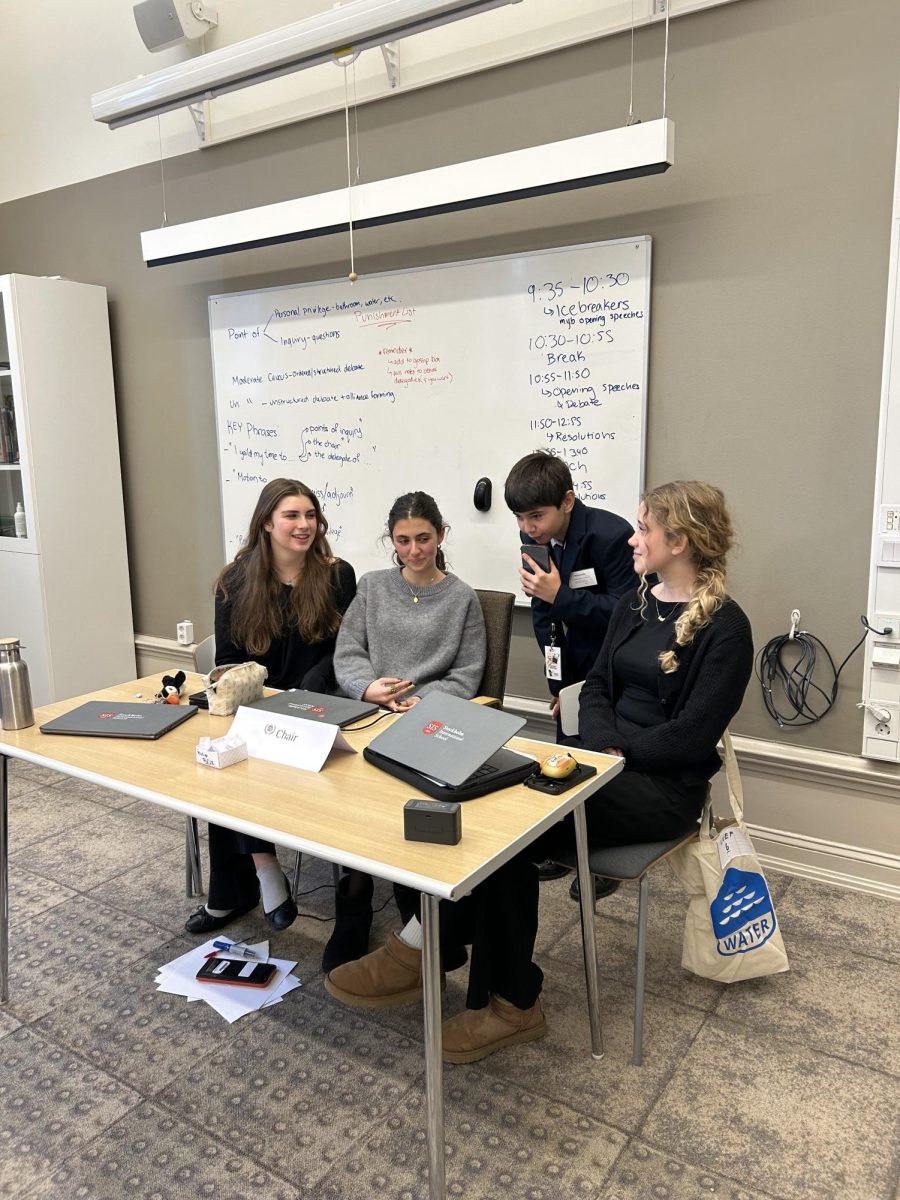
Charlotte D. was impacted by this issue differently. After period one, the chair, Charlotte, who had been preparing this day for numerous weeks, made her way to her allocated room, but to her surprise, her co-chair never showed up. This realisation led to her having to join another committee with Amelie U. and Uma S., both grade 11 students. Charlotte D. said, “For such a last-minute change, there was really good collaboration; our class was also very serious yet entertaining, showing overall good mindsets to make this day successful.”
As if a missing chair wasn’t enough, many important countries were missing in UN Environmental Tournament (UNEP) 6, making it difficult to have a proper debate without the delegates who are directly implicated in the GPGP issues. “However, [they] managed to do well with the delegates present who were dedicated. 85% of the class had never done MUN and had no experience but they still managed to pull through”
The SISMUN 2026 website highlights the relevance of this topic in today’s world, stating that “States are now deploying and relying on satellites for navigation, communication, surveillance and intelligence, making space assets essential to national defence systems.”
In the midst of the constant conflict in the world, Outer Space is certainly an issue that is neglected. This DISEC7 committee allowed students to gain new perspectives on topics that aren’t necessarily a part of media headlines, yet would still have a significant impact on our daily lives if it continues to go unnoticed. The belief that this topic isn’t spoken about enough was felt in the room where representatives of the countries debated to find some middle ground. A delegate believed “it was interesting to hear a wide range of countries’ perspectives and how severe the problem really is.”
In the second committee, UNEP 6, chairs were extremely proud of their delegates, who had shown great commitment: “everyone got along and contributed, which allowed us to have a good MUN conference”
Now, how can we increase attendance? We asked both DP1 students to give us some suggestions in order to make SISMUN ‘27 an even larger success. While Livia J. proposed that “there could be small prizes awarded, such as candy or chocolate, to further increase participation and ensure a productive debate”, Charlotte D. believed that preparation and practice during the students’ humanities classes could prove to them that this day can be fun regardless of the topic and those around you. The fact that it was the delegates’ first time slowed down the entire process and made it difficult to get into the formal procedure. They were shy at first and unprepared at times, which may be a key factor that needs to be changed to increase attendance. Charlotte shared that “It should be the Individuals & Societies teachers’ roles to teach the students to debate, as it would not only create excitement but also ensure that on the day of, students can get into direct debate”.
Thank you for showing incredible support to the Quirky Quibbler‘s 2026 MUN media team. We hope you enjoyed it as much as we did!


