


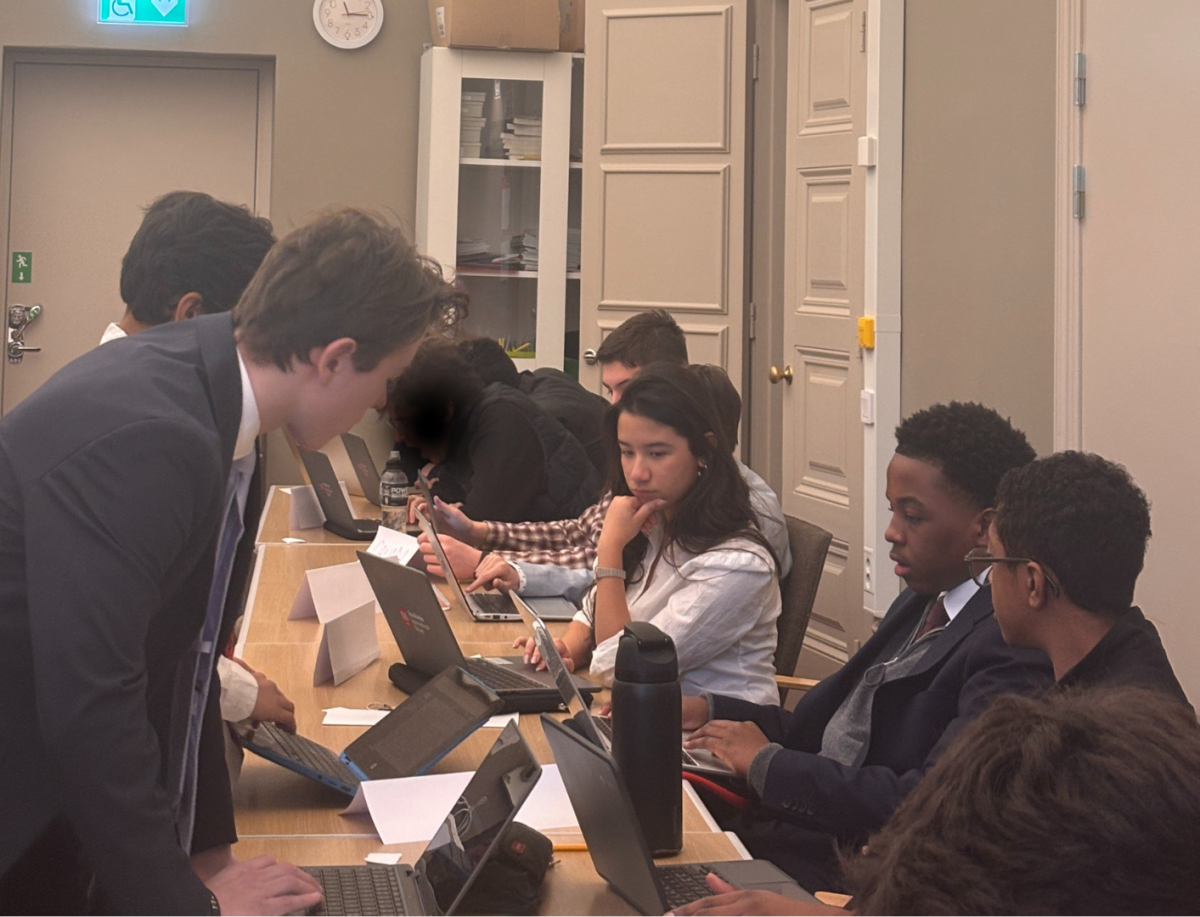
Walking outside room 333, the discussion was clearly audible from the outside, and I became curious; unusual for SISMUN to sound like this. On the other side of the doors, the delegates are arguing the righteous topic, even with the correct terminology, and are doing so with spirit. The debate seems to be regarding the correctness of a fact previously stated, and a fact-check is strongly desired, but doesn’t appear to be reciprocated positively.
The delegation of Russia is a highly passionate participant, firing back both at delegates – and the chairs. “The chair should not have an opinion!”, he shouts. This ends it – the chairs snaps back and the moderated caucus is over.
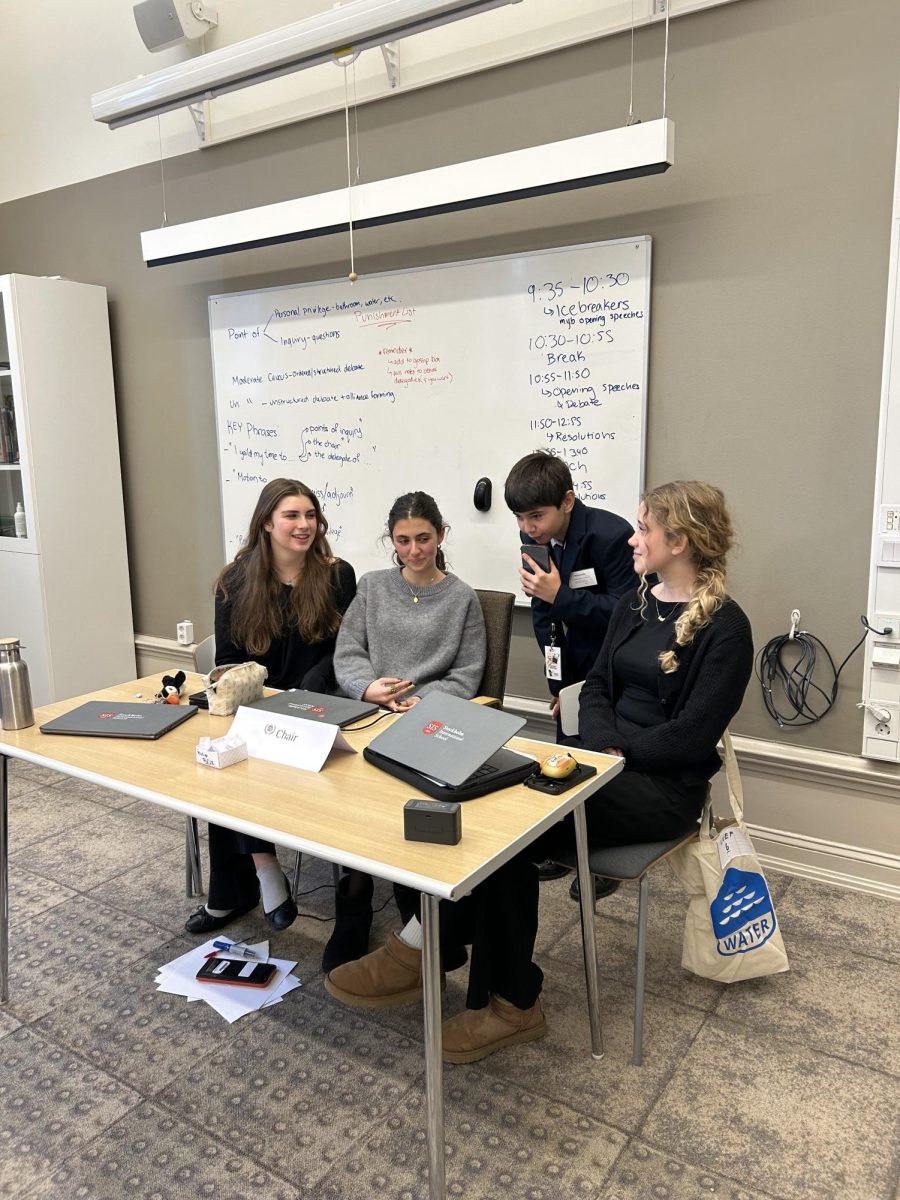
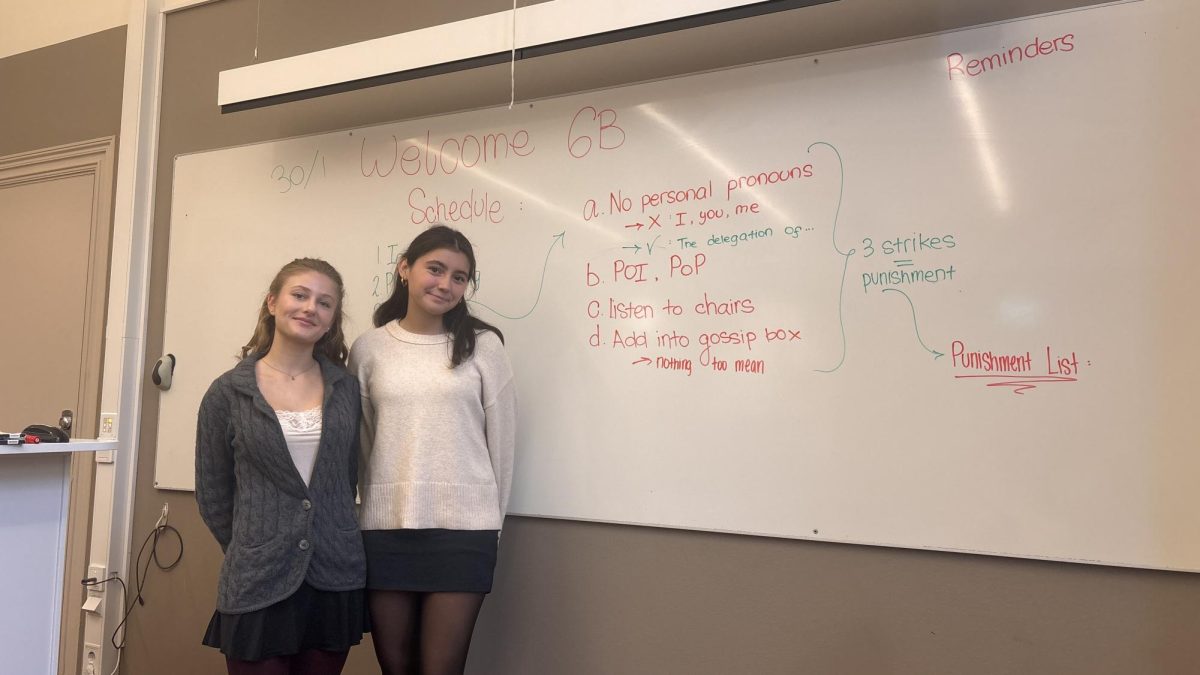
In 6B there is a similar ill-mannered attitude towards the chairs. Victoria M. and Annika O. say that they have highly engaged students, and that they are aware of the “rules” of MUN, particularly the disallowance of using personal pronouns. Several students are on the punishment list already, and now a switch up is happening – students are turning on the chairs, arguing that the two grade 11 students should be put on the list themselves!
Really, this is severely unprofessional behaviour, but the students are the youngest in the building and it’s their first year of MUN. So in one way, maybe it could be seen as a positive thing, that they are brave enough to use their voices and start the journey of MUN with an amusing first experience.
Ordering students to lower voices tends to simultaneously lower participation. There is a complexity to making it an enjoyable experience for students while practising containing eagerness (and rage) during heated discussions, as the more intense discussions tend to get close to the line of what disrespect looks like in this context.
It’s a learning process – and we can hope that the active involvement can carry over into the resolution-making section of the day.






Axel Särkkä • Feb 3, 2026 at 11:08
nice article